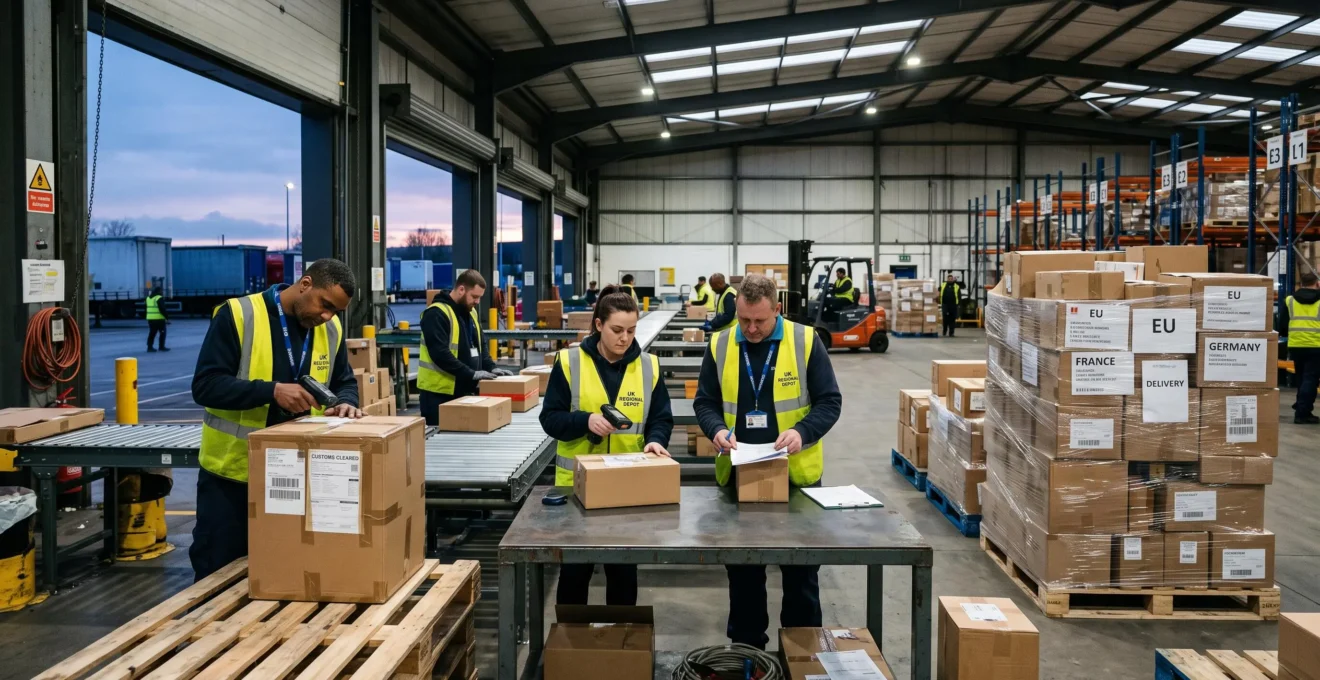
Reducing delivery lead times from China to the USA and EU under one week is rarely a matter of luck or marketing claim. It depends on a chain of operational decisions: where the agent is located, which shipping lane is used, how fulfilment is automated, and how customs clearance is prepared. For a Shopify operator tired of two-to-four-week waits, incoherent tracking and unexpected stock-outs, understanding this chain matters more than reading another promise of fast shipping. The pages below break down the mechanism, compare the four shipping levels available on the market, and give you a verification grid to assess any agent before handing over your store.
What this analysis covers at a glance
- The three operational levers behind a 5-7 day delivery window from China.
- The real perimeter of a dropshipping agent compared to a marketplace supplier.
- A comparison of express, standard, economy and sea freight options.
- A verification checklist to test an agent before committing your store.
- How to structure a durable fulfilment setup beyond fast shipping.
How a reliable China dropshipping agent secures 5-7 day delivery
A 5-7 day delivery window from China to the USA or EU is not a single feature; it is the outcome of three combined levers. First, the agent’s logistical positioning, typically near Shenzhen, shortens the distance between manufacturers, inspection warehouses and departing air hubs. Second, the choice of shipping level — express lanes in particular — compresses the airborne portion of the lead time. Third, automated fulfilment removes the hours or days usually lost between order placement, dispatch and tracking synchronisation.
Shenzhen’s position matters because it concentrates factories, consolidation warehouses and dedicated e-commerce air lanes within short road distances. An order placed on a Shopify store at 09:00 can realistically be picked, inspected and handed over to an express carrier the same day when the agent operates a nearby fulfilment centre. The remaining variable is customs clearance on arrival, which no agent fully controls and which must be factored into any realistic estimate.
The rest of this analysis is designed less to convince you than to equip you. Rather than taking a delivery promise at face value, you can audit any provider against the same mechanism: location, shipping lane, automation, quality control. Apex Hub, for example, communicates its service around these dimensions, which is why evaluating a reliable China dropshipping agent starts with asking how each lever is actually operated, not whether the headline figure sounds attractive.
What does a China dropshipping agent actually manage?
The confusion between an agent and a marketplace supplier is the first source of disappointment for new operators. An AliExpress supplier sells a product and ships it; the operator deals with as many intermediaries as there are SKUs, with no unified quality standard, no stock synchronisation and no consolidated tracking. An agent, by contrast, acts as a single operational interface: sourcing, quality inspection, warehousing, order dispatch and tracking all flow through one party.
Concretely, the agent’s perimeter typically covers five functions. Sourcing identifies and audits factories against your product specifications. Quality inspection checks each batch before it leaves the warehouse. Stock synchronisation feeds real-time availability back to your Shopify, WooCommerce or Amazon catalogue. Dispatch selects the shipping lane and prepares customs paperwork. Tracking updates are pushed back to your store so customers receive accurate information without manual intervention.
Stock synchronisation deserves particular attention because it directly addresses one of the most damaging operational failures: selling an item that is actually out of stock. When the agent updates availability continuously, orders cannot be taken for unavailable SKUs, which reduces refund requests and the volume of “where is my order” tickets. The same applies to tracking numbers: pushed automatically to the store, they close the loop with the customer and remove the manual admin that scales poorly.
Agent vs marketplace supplier : An agent audits suppliers, consolidates fulfilment and syncs stock; a marketplace supplier simply fulfils individual orders without unified accountability on quality or lead time.
Shipping levels compared: express, standard, economy and freight
Choosing between shipping lanes is the single biggest arbitrage between delivery speed and margin preservation. Agents typically offer four tiers, each suited to a different product profile and customer expectation. The figures below reflect lead times communicated by Apex Hub and should be treated as indicative capabilities, not guarantees — customs clearance and seasonal peaks always reintroduce variability.
| Shipping level | Indicative lead time | Typical use case |
|---|---|---|
| Express | 3-5 days | Higher-margin or time-sensitive products where customer experience protects reviews |
| Standard | 5-8 days | Core catalogue with balanced margin and acceptable waiting window |
| Economy | 8-15 days | Low-ticket items where margin preservation outweighs speed |
| Sea freight | 30-40 days | Bulk restocking for private label stock held in a prep centre or FBA warehouse |
Express is worth its surcharge when the product carries enough margin to absorb it or when the perceived waiting time would damage reviews — think accessories bought as gifts, trending items or categories where competitors already deliver within a week. Economy remains defensible for low-ticket impulse purchases where buyers accept a longer wait in exchange for a lower price point, provided the delivery window is clearly communicated at checkout.
Customs clearance is the external variable that affects every tier. According to the official GOV.UK import guidance, importing goods into the UK requires an EORI number and a customs declaration before release, a procedure whose duration depends on each shipment’s documentation and controls. The same logic applies to the EU, where declarations and VAT handling at the point of entry add their own variable processing time. Royal Mail reports that customs compliance ranks as the top international e-commerce challenge for 41.4% of businesses, confirming that even a well-chosen shipping lane remains partly dependent on border formalities.
Seasonal peaks to anticipate : Black Friday, Christmas and Chinese New Year systematically stretch lead times across every tier, as carrier capacity tightens and Chinese factories close for several weeks. Build these windows into your inventory planning rather than relying on standard figures.
How to evaluate an agent before committing your store
Before migrating your entire catalogue to a new agent, apply a structured verification grid rather than taking a sales pitch at face value. The criteria below focus on what can actually be measured — invoices, integrations, inspection reports, test orders — rather than headline promises.
- Line-by-line pricing transparencyRequest a sample invoice showing product cost, service fee and shipping separately. If any charge is bundled or vague, hidden fees are likely.
- Supplier audit and quality inspectionAsk how factories are selected, which defect rate triggers a rejection and whether you receive inspection evidence before dispatch.
- Native integrationsConfirm that Shopify, WooCommerce and Amazon integrations push stock updates and tracking numbers automatically, without CSV uploads.
- Scalability testRun a small batch of 20-50 orders over two to three weeks, measuring tracking consistency, dispatch delays and response time before scaling volumes.
- Private label readinessCheck minimum order quantities, packaging customisation options and whether the same partner can prepare stock for FBA when volumes stabilise.
The pricing test is the fastest way to filter out opaque providers. A trustworthy invoice breaks down product cost, agent service fee and shipping on separate lines, so you can forecast margin per SKU and shipping lane. A quote that simply states a “total per order” without breakdown makes budgeting impossible and often conceals adjustments applied later.
On the technical side, native integrations matter because they remove the manual tracking admin that consumes hours each week as volumes grow. A Shopify or WooCommerce connector should push stock updates in near real time and inject tracking numbers automatically into order fulfilment emails. For Amazon sellers, the ability to prepare and label stock for FBA within the same operational perimeter avoids multiplying intermediaries between the factory and the Amazon warehouse.
- Itemised invoices with product, service and shipping separated.
- Documented factory audits and inspection reports before dispatch.
- Native Shopify, WooCommerce and Amazon integrations.
- Clear capacity to prepare private label and FBA shipments.
- Flat “all-in” quotes without a cost breakdown.
- No evidence of quality control or supplier selection.
- Manual CSV imports instead of real-time integrations.
- Guaranteed delivery claims that ignore customs and seasonal peaks.
Building a durable fulfilment setup beyond fast shipping
Fast shipping protects today’s conversion and reviews; a durable fulfilment setup protects tomorrow’s brand. Once operational basics are in place — reliable lead times, stock sync, inspection — the next layer concerns product differentiation and inventory structure. Private label production allows you to move from generic items to branded SKUs with your own packaging, improving margin and defending against copycats on marketplaces.
FBA preparation extends the same logic to Amazon sellers: stock produced in China is inspected, labelled and consolidated by the agent, then shipped directly to Amazon warehouses in the UK, EU or US. This hybrid setup combines the responsiveness of dropshipping for new SKUs with the scale of FBA for proven winners, keeping a single operational partner across both channels. The transition typically becomes viable once a product consistently sells above a stable monthly threshold — Apex Hub, for instance, communicates an indicative starting point around 50 units, which should be read as an operational benchmark rather than a sector-wide rule.
A durable setup also means accepting that no shipping promise is absolute. The 95,700 UK VAT-registered businesses that imported goods from China in 2025, according to UK government trade statistics, all deal with the same customs variability. The operators who scale successfully are those who build their customer communication, inventory buffers and marketing calendars around this reality, rather than treating every delivery as a guaranteed 5-7 day window.
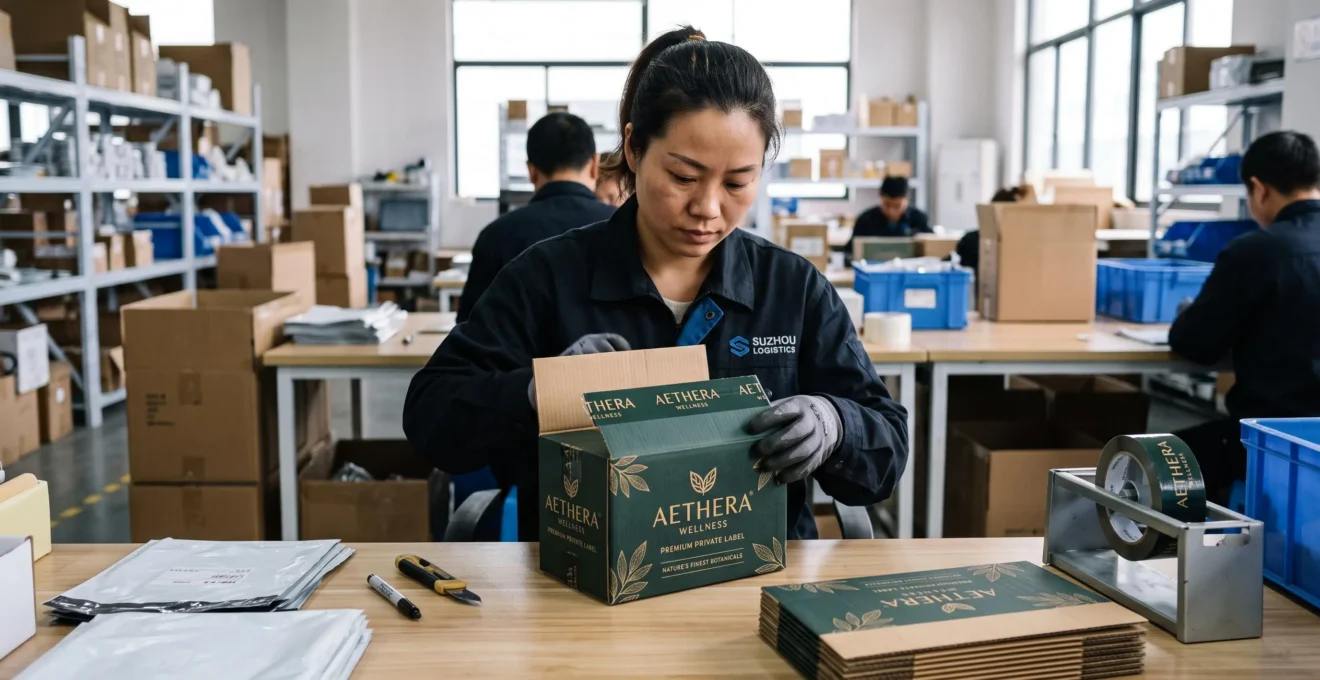
Beyond logistics, building a brand means choosing categories where demand is structural rather than opportunistic. Operators who want to anchor their catalogue in a durable trend can explore ethical products as a growth market for insight on segments where buyer intent compounds over time.
How can I get 5-7 day shipping from China to the USA for my Shopify store?
Work with an agent based near Shenzhen that offers express shipping lanes, native Shopify integration and inspection before dispatch. The 5-7 day window assumes same-day processing, express airfreight and normal customs clearance; delays can still occur during peak seasons or if documentation is incomplete.
What is the difference between a dropshipping agent and an AliExpress supplier?
An AliExpress supplier fulfils individual orders without unified quality control or stock synchronisation. An agent consolidates sourcing, inspection, warehousing, dispatch and tracking through a single interface, which reduces defect rates and the risk of selling out-of-stock items.
How do I check if a China dropshipping agent has hidden fees?
Request a sample invoice showing product cost, service fee and shipping on separate lines. Any bundled “all-in” quote without breakdown prevents accurate margin forecasting and often conceals adjustments applied after the first batch.
When should I switch from dropshipping to private label with an agent?
Once a product sells consistently each month at a volume that justifies minimum order quantities, usually a few dozen units upward. Private label improves margin and brand defensibility, and most agents that support dropshipping can also prepare branded stock for FBA.
The practical takeaway is simple: evaluate the mechanism, not the promise. If an agent can demonstrate warehouse proximity, documented inspections, line-by-line pricing and real-time integrations, the 5-7 day capability becomes credible — not guaranteed, but structurally supported. Start with a small test batch, measure the operational signals, and only then scale your catalogue towards the private label and FBA layers that turn a dropshipping store into a durable brand.